Best AI Tools for Digital Marketing in 2026 (Free vs Paid)
Best AI Tools for Digital Marketing in 2026 (Free vs Paid)
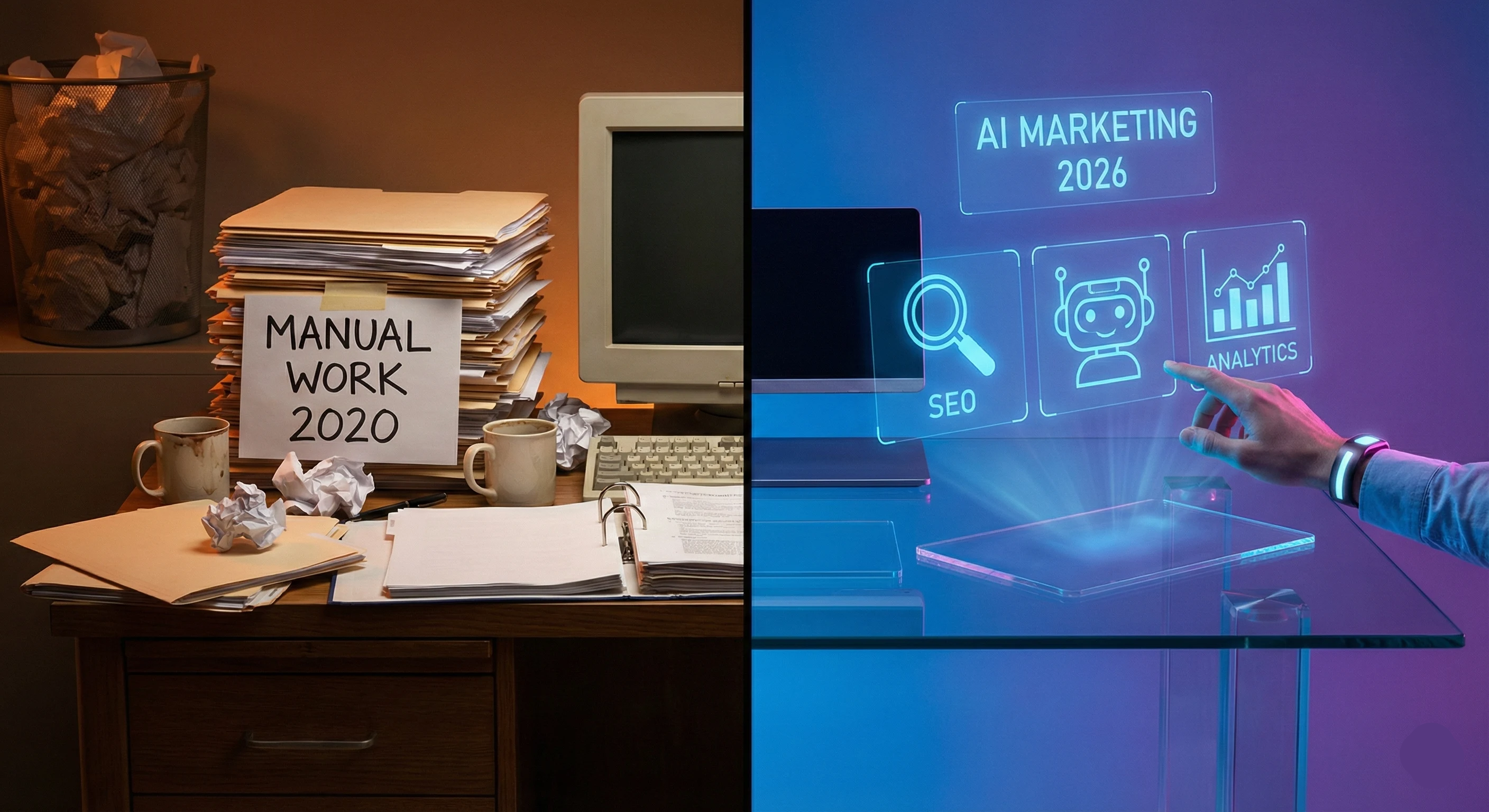
The landscape of digital marketing changes every six months, but the shift we are witnessing from 2025 into 2026 is the most significant in a decade.
The truth is simple: AI will not replace you. However, a marketer using AI effectively will replace a marketer who doesn't.
If you are still relying solely on manual keyword research, writing emails from scratch, or spending hours designing a single social media post, you are already falling behind. At Sameer Digital, we constantly test new technologies to see what actually drives results.
In this guide, I will share the Top 5 AI Tools that every serious digital marketer needs in their toolkit for 2026. We will compare Free vs. Paid options so you can choose the right stack for your budget.
1. ChatGPT-5 & Claude (The Strategy Brain)
The saying used to be "Content is King." In 2026, "Context is God." Generative AI has evolved beyond simple chatbots; they are now sophisticated thinking partners.
Which One Should You Use?
-
ChatGPT (OpenAI): excellent for generating raw ideas, creating blog outlines, and coding assistance for technical SEO.
-
Claude (Anthropic): Known for its "nuance." If you need copy that sounds human, empathetic, and less robotic, Claude is currently the market leader.
Free vs. Paid Verdict:
-
Free Version: Sufficient for basic emails and social media captions.
-
Paid ($20/mo): Essential if you need to analyze data spreadsheets, generate images (DALL-E), or build custom GPTs for your agency.
Pro Tip: Don't just ask AI to "write a blog." Instead, use this prompt: "Act as a Senior Digital Marketer. Critique my current landing page copy and suggest 3 psychological triggers to increase conversion rates."
2. Surfer SEO (Ranking on Google)
In 2026, Google cares less about keyword density and more about "Topical Authority." Random blog posts rarely rank anymore; you need to cover a topic comprehensively.
Surfer SEO is the industry standard for this. It analyzes the top 10 results for your keyword and tells you exactly what those pages have that yours doesn't. It removes the guesswork from on-page SEO.
Key Features:
-
Content Editor: gives you a real-time score (0-100) as you write.
-
Semantic Keywords: It suggests related terms (LSI) that help Google understand your content context.
-
Verdict: This is a Paid Tool (approx. $89/mo). There is no true free alternative that offers this level of data, though Google Keyword Planner is a decent starting point for beginners.
3. AdCreative.ai (High-Converting Ads)
What is the biggest money-waster in Facebook and Google Ads? Creative Fatigue. Audiences get bored of seeing the same banner ad, and your Click-Through Rate (CTR) drops.
AdCreative.ai solves this by using AI to generate hundreds of conversion-focused ad creatives in seconds. The unique selling point is that it is data-driven; it designs banners based on what historically drives sales, not just what looks pretty.
Why Use It?
-
Speed: Generate 50 variations of a banner in under 2 minutes.
-
Scoring: It assigns a "confidence score" to every image, predicting which one will perform best before you spend a rupee on ads.
-
Comparison: Unlike Canva, where you rely on your own design sense, AdCreative.ai relies on conversion data. It is a Paid Tool, but the ROI usually covers the cost within the first campaign.
4. Perplexity AI (The Research Powerhouse)
Traditional Google Search is becoming slower for research. Marketers in 2026 need direct answers, not a list of blue links. Perplexity AI has emerged as the ultimate research assistant.
If you need to perform a competitor analysis or understand a new market trend for a client, Perplexity scans the live web and gives you a cited summary.
-
Best Part: The Free Version is incredibly powerful and often sufficient for most freelancers and small agencies.
5. Canva Magic Studio (Visuals for Everyone)
If you are not a professional graphic designer, Canva is non-negotiable. In 2026, Canva has fully pivoted to AI with its "Magic Studio" suite.
Top AI Features for 2026:
-
Magic Expand: Did you take a photo that is too zoomed in? AI will generate the rest of the background to fit a wide banner.
-
Text-to-Video: Type a prompt, and it generates a short video clip for Reels or Shorts.
-
Brand Voice: It rewrites your text to match your brand's specific tone automatically.
-
Free vs. Paid: The free version is generous, but for an agency, Canva Pro is worth the investment for the one-click background remover and premium stock assets.
Conclusion: How to Win in 2026
Tools are just force multipliers; the strategy must come from you.
To survive in digital marketing in 2026, you must double down on the "Human Touch." Use AI to handle the data, the research, and the rough drafts, but ensure your final output has personal stories, real-world case studies, and a unique voice. Google's algorithms are now smart enough to distinguish between lazy AI content and helpful, human-edited content.
My Recommendation: If you are just starting, master ChatGPT (Free) and Canva. Once you have paying clients, reinvest your profits into Surfer SEO immediately.
Your Next Step: Which of these tools will you try first? If you need help building a digital marketing strategy that actually converts, visit the [Sameer Digital Contact Page] today.
Frequently Asked Questions (FAQ)
Q1: Are there free AI tools available for digital marketing? Answer: Yes, several powerful AI tools offer free versions. ChatGPT (for content), Perplexity (for research), and Canva (for design) all have generous free tiers that are perfect for beginners and small businesses starting out in 2026.
Q2: What is the single best SEO tool to use in 2026? Answer: If your focus is ranking content on Google, Surfer SEO is the industry leader because it focuses on "Topical Authority." However, for deep technical website analysis (backlinks and site health), Semrush or Ahrefs remain the top choices.
Q3: Will Google penalize me for using AI-written content? Answer: No, Google does not penalize content just because it is AI-written. Google's core ranking systems look for high-quality content that helps users (E-E-A-T). As long as your content is accurate, helpful, and edited by a human to add value, it can rank well.
Q4: Is AdCreative.ai worth the money for small businesses? Answer: Yes, if you are running paid ads on Facebook or Google. The cost of the tool is often much lower than the money wasted on bad ads that don't convert. It helps you find a "winning" ad creative much faster than manual testing.
Q5: Can I replace my digital marketing agency with AI? Answer: Not entirely. AI is an excellent assistant for execution (writing, designing, analyzing), but it lacks high-level strategy and emotional intelligence. You still need human experts to understand your brand voice, manage client relationships, and make strategic business decisions.